
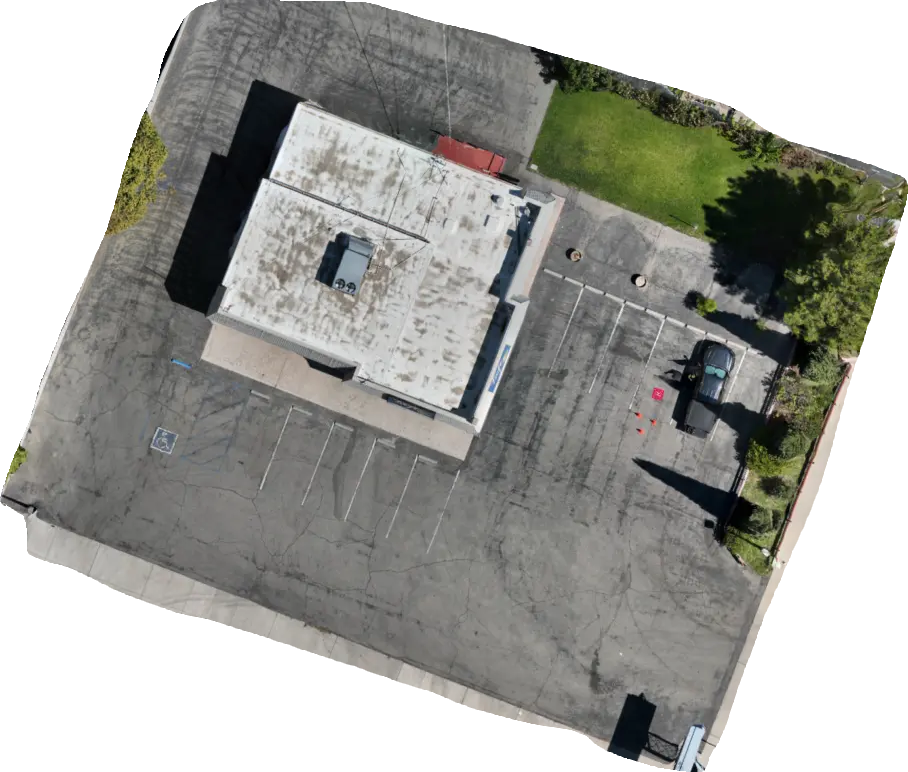
High-Resolution Aerial Visuals for Planning and Coordination
Aerial mapping and data acquisition in Taft for properties and sites where current overhead imagery is needed by engineers, surveyors, or project teams
Outdated satellite imagery is a practical problem for anyone coordinating work on agricultural land, undeveloped parcels, or active construction sites in Taft. What appeared on a satellite pass two or three years ago may not reflect current fence lines, access roads, irrigation layouts, or newly added structures. 661 Aerial Ops captures drone-based aerial imagery that reflects actual current conditions, giving surveyors, engineers, and contractors a visual reference that matches what's on the ground when planning and coordination begin.
The process involves flying a planned route over your property to capture overlapping high-resolution images at consistent altitude. Those images are processed into a clear composite that shows the full site from a single overhead perspective—field divisions, tree rows, dirt roads, perimeter fencing, irrigation runs, and structural footprints all visible in one image rather than stitched together from ground-level guesswork. The final deliverable is a georeferenced image file that can be viewed in standard software, printed at scale, or shared directly with surveyors and engineers working on the project.
Request a property flight through 661 Aerial Ops to produce current overhead imagery of your Taft site before your next planning or coordination phase begins.
Why Current Aerial Imagery Changes How Projects Are Coordinated
Agricultural parcels in Kern County often have features that don't appear on county assessor maps or older satellite images—informal access paths, seasonal irrigation infrastructure, equipment storage areas, or field divisions established after the last imagery pass. When surveyors or engineers begin work without a current visual reference, early site visits are spent identifying features that could have been communicated in advance. Accurate aerial imagery before coordination begins compresses that discovery phase and reduces the number of assumptions built into early planning documents.
After the flight and processing, your team receives imagery that shows the site as it currently exists—fencing where it actually runs, roads as they're currently positioned, and structures at their current footprints. What your surveyor or engineer sees in that image matches what they'll find on the ground, which makes their subsequent measurements and assessments more efficient. For properties where site access is logistically complex, current aerial imagery lets professionals identify access routes, gate locations, and staging areas before their first visit.
This service provides aerial visual imagery and does not include land surveying, boundary determination, elevation modeling, or any measurement product regulated under the Professional Land Surveyors Act. The imagery is intended to support and complement the work of licensed professionals, not replace it.
The following addresses common questions about what aerial mapping involves, what the imagery shows, and how it integrates with professional site work. These are the operational details that most affect how teams plan and use the deliverable.
Questions About How Aerial Mapping Works
What features are visible in the final aerial imagery?
High-resolution overhead images clearly show fence lines, irrigation infrastructure, access roads, tree rows, building footprints, equipment storage areas, and terrain contour changes. Fine details like individual post spacing or surface material type depend on flight altitude and image resolution settings for your specific site.
How is the flight route planned for a specific property?
The route is designed to cover your full parcel with overlapping image passes that eliminate gaps. Property boundaries are reviewed before the flight so coverage includes all relevant features rather than stopping at arbitrary edges.
What file format does the final image come in?
Deliverables are provided as georeferenced image files compatible with standard GIS software, desktop viewers, and print applications. Your surveyor or engineer can open and work with the file directly in the software they already use.
How does aerial imagery of agricultural land in Taft differ from pulling a satellite view online?
Publicly available satellite imagery for Kern County parcels is often one to three years old and captured at low resolution from high altitude. A dedicated flight produces current, higher-resolution imagery at an altitude calibrated to your parcel size, showing features that don't appear in satellite passes at all.
What does the service not include?
Aerial mapping with 661 Aerial Ops produces visual imagery only. Boundary surveys, elevation measurements, topographic data, and any other regulated surveying outputs are outside the scope of this service and require a licensed land surveyor.
661 Aerial Ops serves property owners, agricultural operators, and project teams in Taft who need current aerial imagery before planning, coordination, or professional site work begins. Contact 661 Aerial Ops to discuss your parcel and schedule a flight that delivers imagery when your project timeline requires it.